Introduction
Border crime isn’t just a distant policy problem. It’s something that crops up in real communities all over the country. From smuggling operations to drug trafficking, criminal networks use America’s borders as entry points, impacting everything from national security to local safety and the economy. While criminals work together across borders and agencies, a disconnected law enforcement response won’t keep up. Coordination between agencies is a must for tackling smuggling, trafficking, and all those cross-border threats.
Understanding how law enforcement agencies prevent border crime is crucial for effective policy-making and community safety.
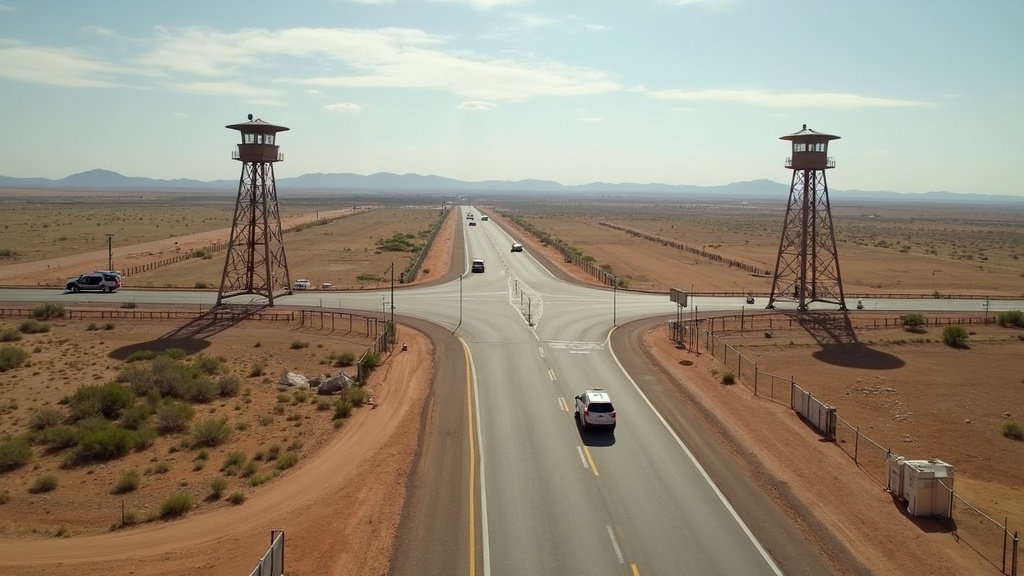
Table of Contents
Understanding Border Crime
Border crime covers a whole range of illegal activity that targets the seams between countries. When I think about what falls under this umbrella, it’s more than just drugs and people coming across between checkpoints. Here are a few of the key things law enforcement faces at the border:
- Drug Trafficking: Smuggling of narcotics, especially opioids, cocaine, and methamphetamine.
- Human Smuggling and Trafficking: Illegally transporting people across borders, often under dangerous conditions.
- Arms Trafficking: Movement of guns and explosives across boundaries.
- Fuel Fraud and Financial Crimes: Money laundering, tax evasion, and trade-based fraud schemes.
Borders are a magnet for these crimes because they’re busy and complex. There are tons of people and goods coming in and out, which gives organized criminals more chances to hide what they’re doing. Some sections of the border stretch for hundreds of miles, making it trickier to keep everything secure. Communities near the border feel a ripple effect, with safety worries, violence, and heavy demands on police and courts.
Key Federal Agencies Involved
More than a few agencies have a role in stopping border crime. Each has its own specialty and legal powers that help plug gaps in coverage. Here’s a look at the major players:
- U.S. Customs and Border Protection (CBP): This agency stands at the front lines. They handle inspections at ports of entry, patrol the roadless stretches, and even run surveillance in the air and on the water.
- Homeland Security Investigations (HSI, part of ICE): These investigators dig into broader criminal networks hiding behind cross-border activity. They target financial crimes, trade violations, and organized smuggling rings.
- Drug Enforcement Administration (DEA): The DEA tackles narcotics, from tracking distribution networks to seizing illegal shipments before they spread through U.S. cities.
- Federal Bureau of Investigation (FBI): While primarily handling counterterrorism, the FBI also targets major transnational organized crime groups using the border as a gateway.
- Bureau of Alcohol, Tobacco, Firearms and Explosives (ATF): The ATF gets involved when guns, explosives, or illegal ammo shipments are discovered.
- Other Stakeholders: These include the U.S. Marshals (fugitive tracking), the Coast Guard (maritime interdiction), Department of Justice prosecutors, and state or local police who have boots on the ground near border towns.
Legal Frameworks Guiding Cooperation
With so many agencies involved, having legal frameworks in place is crucial to smooth teamwork. A few key federal laws guide how agencies work together to fight border crime:
- Title 18, Title 19, and Title 21 of the U.S. Code: These cover everything from criminal laws to customs and drug offenses.
- Homeland Security Act of 2002: This act brought border agencies under one umbrella, the Department of Homeland Security, making coordination easier.
- Patriot Act, Anti-Drug Abuse Acts, and Related Statutes: These laws give federal agents tools to share info, investigate suspects, and connect criminal cases.
- MOUs (Memoranda of Understanding) and Interagency Agreements: Formal agreements let agencies form joint task forces and share resources without getting in each other’s way.
Mechanisms of Coordination
Agencies rely on a mix of systems and teams to keep communication flowing and enable joint enforcement. Here’s how they work together on the ground:
- Joint Task Forces: These teams are all along the border. For example, Joint Task Force-West brings in CBP, ICE, FBI, and others to focus on the Southwest. At places like the El Paso Intelligence Center, agents from different agencies share information and pool efforts for their investigations.
- Fusion Centers: Information-sharing hubs that link local, state, and federal officers. Even a small sheriff’s office can access surveillance or threat data from CBP in real time.
- Technology Integration: Agencies share databases like the National Crime Information Center, the Treasury Enforcement Communications System, and Automated Targeting System. Shared biometrics systems and drone surveillance help patrol tough regions more efficiently.
- Cross-Border Cooperation: U.S. agencies set up bilateral task forces with Mexican law enforcement, sometimes called vetted units or TCIUs. This helps disrupt smuggling before the crime spills across borders.
Intelligence & Information Sharing
Success against border crime depends on getting accurate, timely information. Intelligence operations focus on intercepting communications, conducting wiretaps (legally), and developing informants who tip off law enforcement about new smuggling tactics. Following suspicious money movements is another big part of the puzzle—financial tracing can track down criminal networks even when they use front companies.
Linked databases help agencies avoid doubling up on investigations or missing critical evidence. But info-sharing isn’t always seamless. Some agencies still operate on aging systems that aren’t easily compatible, and privacy rules put limits on openness. Overlaps in jurisdiction and tech hiccups slow things down, yet the trend is toward better integration every year.
Case Studies in Border Coordination
- Operation Fast and Furious (ATF): This operation exposed how messy things get when teamwork falls short. Guns intended as tracking devices ended up with criminals, showing why planning and sharing information is so important.
- HSI & DEA Joint Investigations: Big cartel busts often start with months of teamwork. DEA and HSI share surveillance, financial leads, and undercover skills to break up entire smuggling networks.
- Human Smuggling Operations: These usually need cooperation from Border Patrol, HSI, and sometimes the FBI to catch both smugglers and the organizers pulling the strings.
- Financial Crime & Fuel Smuggling: When illegal profits are funneled through gas stations or export fraud, IRS-CI, HSI, and even the Department of Energy may join forces to stop these schemes.
Challenges to Effective Coordination
- Jurisdictional Overlaps: Sometimes it’s unclear who leads an investigation, which can slow things down or let criminals exploit the cracks.
- Information Silos: Agencies sometimes hold back info or lack the database crosslinks that would give them a full view of a criminal network.
- Resource Allocation: Joint efforts cost money and need teams trained for interagency work. Competing priorities make it tough to get every agency engaged at full strength.
- Corruption & Insider Threats: Smugglers try to co-opt officials on either side of the border, which makes strong vetting and oversight essential.
- International Politics: Not all countries see eye-to-eye on enforcement tactics. Diplomatic or sovereignty concerns sometimes get in the way of smooth cooperation.
Innovations & Future Directions
- AI & Predictive Analytics: Advanced systems recognize patterns in shipments, travel data, and financial transactions, sending up a red flag when something looks suspicious.
- Smart Borders: Biometric screening, automated license recognition, and AI-powered drone coverage help spot threats earlier and more precisely than ever before.
- PublicPrivate Partnerships: Banks, trucking firms, and tech companies work with law enforcement to share suspicious patterns and build stronger oversight across supply chains.
- Policy Recommendations: It helps to keep MOUs current, promote joint task forces, and push for better international agreements as criminals constantly mix up their tactics.
Frequently Asked Questions
Question: Who takes charge if a crime crosses from one state to another, or from the U.S. to Mexico?
Answer: Usually, federal law enforcement leads cross-border or interstate cases, working together with both sides and including local police where needed. Jurisdiction is usually sorted out in planning meetings.
Question: How do officers from different agencies avoid confusion on the ground?
Answer: Joint task forces assign clear roles and responsibilities, set up daily briefings, and use shared reporting chains. MOUs list each team’s job and clarify who commands operations.
Question: Do law enforcement agencies in other countries work with the U.S. on border crime?
Answer: Yes, working with Mexican authorities and other global partners is key to the strategy. Success depends on treaties, shared goals, and how much trust the governments build together.
Wrapping Up
Cooperation between law enforcement agencies has never been more important for keeping U.S. borders secure. Criminals organize and move quickly, so agencies need to keep stepping up how they share information, trust each other, and use new tools to stay ahead. Supporting these efforts isn’t just about policy or technology. It’s also about local communities and international partners staying sharp and getting involved to help build safer borders now and for the future.
If you feel like you need to report a crime involving money laundering, please don’t hesitate to contact your local law enforcement or, if in the United States, reach out to the Homeland Security Investigations or the Federal Bureau of Investigations.
Contact Us:
If you need to contact us for any reason, please feel free to do so here!